
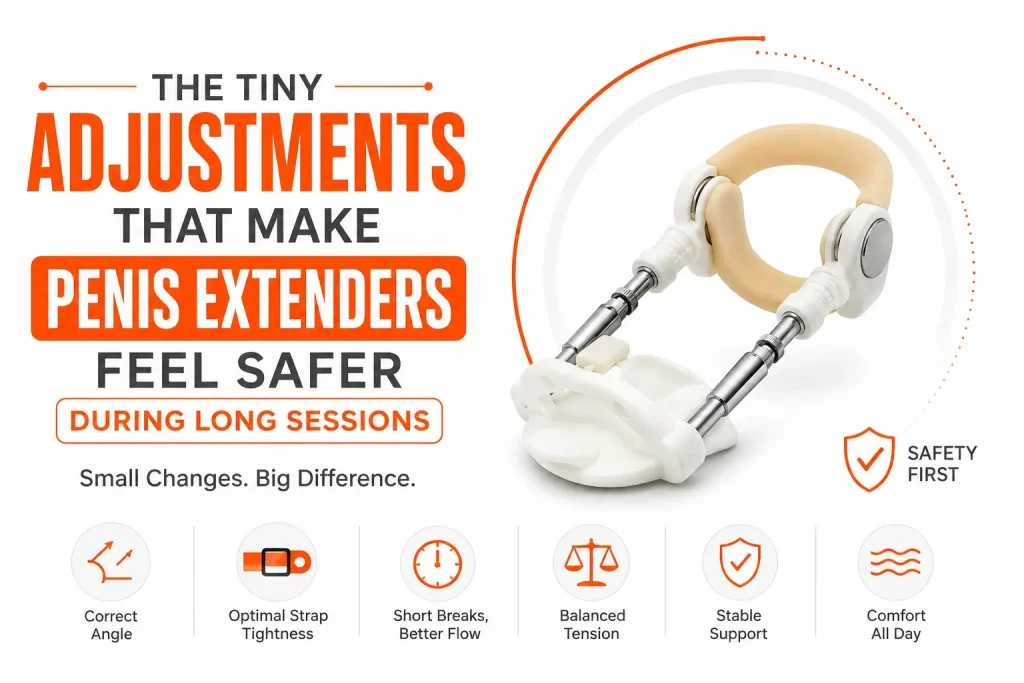
Many extender users assume safety depends only on tension settings or device quality. The truth is more subtle. Long sessions become safe and comfortable because of small adjustments that most beginners never learn.
These tiny changes decide whether the user completes a full session or ends up cutting it short because something feels wrong. When the body stays stretched for hours, even a slightly uneven angle or a small pressure point can create irritation, numbness or skin damage.
Positioning the Penis Extenders at the Correct Angle
The first mistake many users make involves angle. They place the extender straight forward or straight upward without paying attention to pelvic shape. Each body has a natural direction in its flaccid state. For some users, it points downward. For others, it rests slightly upward. An extender that forces an unnatural angle increases stress on the ligaments near the base. This stress grows during long sessions and causes soreness.
A simple adjustment solves this. Before you begin the session, check the natural angle of your body when fully relaxed. Set the extender to follow that angle instead of forcing a different direction. When the extender matches your natural alignment, tension spreads evenly. This reduces strain and keeps the device stable.
Adjusting Strap Tightness to the Minimum Needed
Many users tighten the strap because they fear slippage. Tight straps create the opposite problem. They compress veins and nerves under the glans. This compression slows circulation and causes numbness. The safest approach begins with the lowest strap tightness that still keeps everything secure.
The trick is to tighten only enough to prevent sliding during the first few minutes of the session. Once you feel stable, stop tightening. If you feel a tingling sensation within five minutes, reduce the tightness again. When you find the right level, you can wear the extender for long sessions without cutting off circulation.
Using Short Breaks to Reset Circulation
Even when everything feels perfect, long sessions still require short breaks. A ten minute break every ninety minutes resets blood flow and prevents pressure buildup. You do not need to remove the extender fully. You can loosen the strap, lower the tension slightly and gently massage the area. This small routine keeps tissues healthy and prepares the body for the next segment of the session.
Beginners often skip breaks because they do not want to interrupt progress. The opposite happens. Long stretches without breaks create swelling and redness that reduce the duration of future sessions. Short breaks make sessions smoother and safer.
Balancing Tension Between Both Sides of the Device
Extenders with adjustable tension rods often allow each side to be tightened individually. If both sides do not match, the device tilts slightly. This small tilt pulls more on one side of the shaft, and long sessions amplify this imbalance.
Before starting, place the extender on a flat surface and check rod symmetry. If one rod sits higher, adjust both sides until they match perfectly. This prevents uneven pressure and encourages straight traction. Users who skip this step often struggle with discomfort that seems impossible to diagnose. Balance fixes it.
Keeping the Support Base Stable
The support base holds the extender against the pubic area. When it rocks or leans, the pressure shifts from the center to the edges. This quickly becomes uncomfortable. You can fix this by repositioning the base at small angles until it sits flat against the pubic bone.
Look for these signs of poor positioning.
• The device lifts slightly when you move.
• The base digs into one side.
• Pressure feels uneven along the bottom.
Shift the base a few millimeters in each direction until it settles. A stable base increases comfort and reduces skin irritation.
Spreading Tension Gradually Instead of Increasing It Quickly
Many users increase tension based on numbers they see in guides or reviews. These numbers ignore individual differences. A better approach uses gradual micro increases. After attaching the extender, apply the lowest tension for ten minutes. This warm up period prepares your body for more stretch. After those ten minutes, add a small increase. Wait another ten minutes. Add again if needed.
Your body responds better to gentle buildup. Sharp increases without warming up strain the ligaments and cause soreness that ruins long sessions.
Using Support Padding Only Where It Helps
Padding works well when placed correctly. Too much padding causes problems. When users wrap thick padding around the head or shaft, they create uneven layers. These layers increase pressure on one side and loosen the strap on the other.
The safest strategy uses thin, even padding. You want just enough softness to reduce friction, not so much that it affects the grip. Place it exactly where you feel rubbing. If padding shifts during the session, rewrap it. A small adjustment in placement can eliminate pressure points that ruin long wear.
Checking Skin Condition Before Every Session
Skin condition changes throughout the day. If the skin feels dry, add a small amount of moisturizer and let it absorb before putting on the extender. Dry skin increases friction and raises the chance of micro tears. If the skin feels irritated from a previous session, give yourself extra rest before starting the next one. Healthy skin handles traction far better than stressed skin.
Think of skin condition as a vital part of your session routine. A two minute check often prevents discomfort later.
Making Micro Adjustments During Movement
Many users stay still during long sessions because they fear moving will loosen the device. Movement is normal. The key is adjusting quickly after each shift. When you stand or sit, check tension. If the device feels tighter or looser after the movement, give the rods a small adjustment.
You can also use your hand to gently reposition the shaft so it sits properly within the device. A few seconds of correction after every position change prevents sudden bursts of pressure that cause discomfort or injuries.
Managing Heat and Temperature
Warm tissue stretches more comfortably. Cold tissue tightens and becomes sensitive. If you start a session after being in a cold room, the extender feels harsher. You can improve comfort by warming your body before starting the session. A warm shower, a warm cloth or even a few minutes under a blanket helps. Warm tissue adapts to tension better and stays relaxed during long sessions.
Avoid overheating. Too much heat causes sweat, and sweat increases slipping. You want mild warmth, not excessive heat.
Wearing the Right Clothing for Support
Loose clothing reduces friction and prevents the extender from shifting. Tight clothing squeezes the frame and changes the angle, which increases discomfort. Shorts or loose joggers work well. If you wear underwear, choose breathable fabric that prevents sweat.
Clothing that presses against the rods can force the extender into unnatural angles. Clothing that gives space keeps the extender aligned and safe.
Taking Advantage of Pre Session Massage
A sixty second massage before attaching the extender increases blood flow and relaxes tissues. This small routine improves comfort across the entire session. Some users ignore it because it takes time, but the difference becomes clear after a few days. Pre session massage reduces tension spikes and keeps circulation steady, which makes long sessions more achievable.
Listening to Early Signals Instead of Waiting for Pain
The safest extender users have one habit. They respond quickly to small changes. If the head feels cool, they loosen the strap. If they feel slight tingling, they adjust tension. If they feel uneven pressure, they reposition the frame. Pain should never appear. Tiny signals reveal problems long before pain arrives. Acting early keeps sessions safe and productive.
Final Thoughts
Long extender sessions become safe and comfortable through small, consistent adjustments. Angle, strap tightness, tension balance, base support, padding and movement correction all matter. These minor changes protect circulation, reduce irritation and improve long term results.
Extenders work best not through force but through careful technique. When you understand these tiny adjustments, your sessions feel easier, safer and more productive every day.